- By John Hansen
- 21 Nov, 2025
- Horror Movies
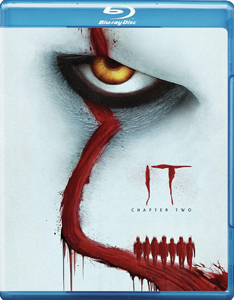
I’m not scared of clowns. Can I still enjoy ‘It: Chapter Two’ (2019)?
“It” – in all its incarnations – strikes me as Stephen King’s (and the adapters’) attempt to expand the themes of “Stand By Me” (the best friends you’ll ever have are your childhood friends) into an epic horror saga. With “Stranger Things” winding down, the “It” franchise is attempting to fill that looming void with a TV prequel, “It: Welcome to Derry.”
This franchise has a flaw at its core, which I noticed with “It” (2017) and now on my viewing of “It: Chapter Two” (2019), which catches up with the kids of the Losers Club 27 years later, now in their early 40s. Pennywise (Bill Skarsgard) is not scary or intriguing to me. I suspect I lack the “clowns are scary” gene.
For those who do find Pennywise to be a terrifying villain, that completes “It: Chapter Two” as the epic it intends to be, because the film does almost everything else right. If a Best Casting Oscar had existed that year, “Chapter Two” should’ve won it. All of the adults continue smoothly from the teens, and furthermore, writer Gary Dauberman (the “Annabelle” trilogy) and director Andy Muschietti (“The Flash”) use the younger actors in many flashbacks – some scenes from “Chapter One” and some new footage.
“It: Chapter Two” (2019)
Director: Andy Muschietti
Writers: Gary Dauberman (screenplay), Stephen King (novel)
Stars: Jessica Chastain, James McAvoy, Bill Hader
So when we think of Bev, we think of both Jessica Chastain and Sophia Lillis. Bill is simultaneously James McAvoy and Jaeden Martell. And so forth through the whole septet that is the Losers Club.
Commercial real estate
Muschietti and cinematographer Checco Varese — shooting in Toronto as a stand-in for Derry, Maine – create beautiful commercial art. I have no complaints about Muschietti’s individual sequences. “Chapter Two” is very watchable despite being nearly 3 hours long (although I admit I split it into two sittings).
Dauberman gives it the ole college try but falls short of excising the experimental feel of King’s story, particularly with the plot. The screenplay has to scrap the horror cliché wherein the past killings have faded into myth and microfiche, because these same seven people are the protagonists. As such, Pennywise – in addition to luring and eating kids – has the vague additional power of making people forget the old events.
So a long portion of the movie has to be spent establishing that Mike (Isaiah Mustafa, taking over for Chosen Jacobs) – who has not forgotten about 1989 by dint of trying really hard – has noticed Pennywise’s new depredations, is calling the gang back to Derry to take on this supernatural clown, and is developing a specific plan.

For story-structure purposes, this conveniently involves everyone confronting a past nightmare and collecting a sentimental object. It’s like Pennywise (who can make nightmare-scapes real and possibly deadly), Mike and Dauberman are collaborating to give “Chapter Two” a plot in addition to a vibe.
The character-building is enhanced by the aforementioned younger-older matches, along with the relatable truths. For instance, the group has one token female, so you know there’ll be a love triangle, and it’s a pretty poignant one between Bev, Bill and Ben (Jay Ryan/Jeremy Ray Taylor).
Scared to go all-in
On the other hand, Dauberman does some strange self-censoring; I might’ve thought it was to get a PG-13 instead of an R, but it is firmly an R already. It’s lightly suggested that Bev was raped by her father, and that Richie (Bill Hader/Finn Wolfhard) is gay. These situations can also be read as Bev’s father was abusive but not a rapist, and Richie targets his jokes at others to avoid being attacked himself, but isn’t an outsider in the specific category of sexual orientation.
In many cases, subtlety is good, but since “It” is driven by characters’ fears and shames, it’s not the time to pull punches. It’s the time to be explicit with revelations and imagery. The opening sequence achieves this. Even though it’s the cliché of Derry rednecks attacking a gay couple, it has shock value because a tween is leading the hateful charge. Nothing later on equals this chilling tone-setter.
“Chapter Two’s” CGI effects are perfect, and that’s ironically a flaw – at least to viewers who are the age of the adult characters. Maybe younger viewers see it differently. But to me, there’s a weird thing in movie-watching wherein practical effects like those from “The Thing” (1982) are clearly not real yet they evoke responses of revulsion and fear. Meanwhile, “Chapter Two’s” severed head with spider legs growing out of it – a “Thing” homage – looks as real as can be yet doesn’t evoke a response other than appreciation for elite CGI.
The filmmakers are perhaps aware of this incongruity. When Richie sees the head-creature hiding in the ceiling joists, he simply says “Oh, there it is.” It’s ostensibly a comic-relief delivery, but there’s nothing to take relief from, so the line plays as “Eh, whatever.” In the final showdown, inevitably in the caverns below Derry, my pulse didn’t pound at all.
As with “Chapter One,” the filmmaking is professional and heartfelt in “Chapter Two.” If it’s a cash grab to expand a book into two movies, it doesn’t feel like a cash grab. King’s idea that the overcoming of one’s fears and hangups marks the threshold to true adulthood is smartly illustrated through metaphors such as Bev marrying an abuser and Bill being unable to write satisfying endings to his novels. And yet “It: Chapter Two” is not scary, relying too much on something that clicks with King but is not as universal as he’d hope: that clowns are something beyond clownish.
?)
Leave a Comment