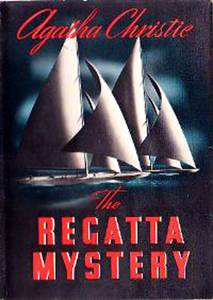
Christie delivers variety in ‘Regatta Mystery’ (1939)
Sleuthing Sunday (Book review): Poirot and Christie’s other top detectives trade the stage in this excellent collection of nine short stories.
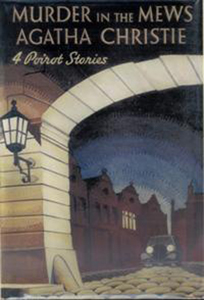
Christie tries novella form in ‘Dead Man’s Mirror’ (1937)
Sleuthing Sunday (Book review): I enjoyed all four of these Poirot yarns from Agatha Christie. The last two have particularly satisfying endings.
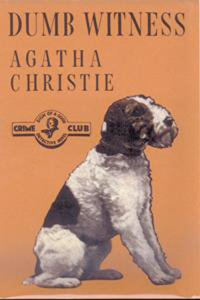
Poirot, dog sniff out Christie’s ‘Dumb Witness’ (1937)
Sleuthing Sunday (Book review): The Belgian detective’s sense of justice stands out in this Agatha Christie novel.
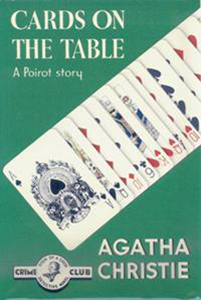
‘Cards on the Table’ (1936) shows closed-room mystery mastery
Sleuthing Sunday (Book review): Agatha Christie’s closed-room mystery had me guessing till the end about which of the four suspects did it.
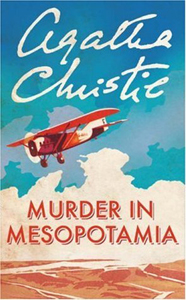
Poirot all business in ‘Murder in Mesopotamia’ (1936)
Sleuthing Sunday (Book review): You could hand this Agatha Christie novel to a newbie and say “This is the template for a Poirot mystery.”
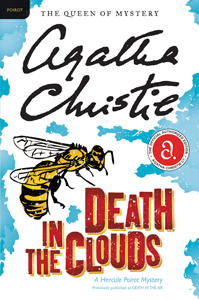
Poirot airs his theories in ‘Death in the Clouds’ (1935)
Sleuthing Sunday (Book review): Agatha Christie tries a new riff on the closed-room mystery with a closed-cabin mystery.
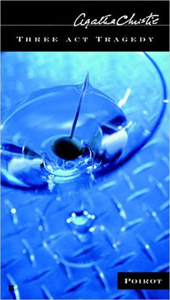
Christie gets theatrical in ‘Murder in Three Acts’ (1935)
Sleuthing Sunday (Book review): This novel doesn’t have the strictest three-act structure, but it does tap into the notion of life as a performance.
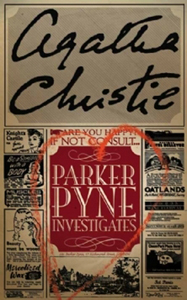
Christie expands sleuth roster with ‘Parker Pyne Investigates’ (1934)
Sleuthing Sunday (Book review): Christie struggles to come up with the right word for Pyne’s job. He’s like a life coach, except you pay by the situation.
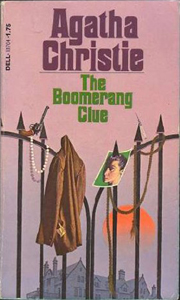
‘Boomerang Clue’ (1934) a better romance than mystery
Sleuthing Sunday (Book review): It’s too bad Frankie and Bobby didn’t get more stories, because they’re by far the best part of this Christie yarn.
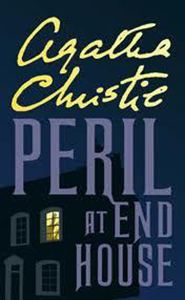
Poirot questions himself in ‘Peril at End House’ (1932)
Sleuthing Sunday (Book review): A vacation turns into a murder mystery, but that doesn’t mean Poirot is off his game. Nor is Christie.