

 By
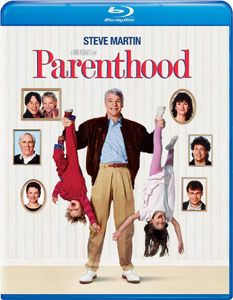
By “Parenthood” (1989) is a deceptively simple dramedy about three generations in a family and different parenting techniques. Director Ron Howard, initially famous for portraying a 1950s teen in “Happy Days,” now portrays parental life in 1989. But this peek at the Buckmans is timeless and touches a lot of the bases you’d expect.
Not so many that they’re all covered – indeed, young Kevin (Jasen Fisher) skips over what happens when you slide into second – but two TV series would follow and explore an increasing array of children’s troubles and new challenges of parenting. First is a 12-episode quickie in 1990-91 that’s unfortunately lost to history despite featuring early work from writer Joss Whedon and cast members David Arquette, Leonardo DiCaprio and Thora Birch.
Second is the 2010-15 series – in which the Buckmans become the Bravermans — that got a lot of love on this blog. This franchise is notable for not trying to do too much (compare it to “This Is Us,” from 2016-22, which gets fancy with its time-jumping) and connecting with a wide and knowing audience. In real life, I see parents react calmly to seemingly weird behavior, and the rhythm of this movie helps me to understand the normalization of the bizarre.
“Parenthood” (1989)
Director: Ron Howard
Writers: Lowell Ganz, Babaloo Mandel, Ron Howard
Stars: Steve Martin, Mary Steenburgen, Dianne Wiest
The strange disconnect between kids’ brains and parents’ brains starts when Steve Martin and Mary Steenburgen are tooling along the highway and Kevin sings the Diarrhea Song (“When you’re sliding into first, and you feel something burst …”). He learned it at camp and passes it along to his delighted sister (Alisan Porter, later of “Curly Sue”).
Though the movie’s message is an old-fashioned “Let kids be kids, and intervene with caution,” Rick Moranis’ Nathan stands out with the opposite approach. He has a detailed strategy mapped out for building his young daughter into a successful professional woman. She basically has a college education by age 5. The kid seems fine with it, rather than traumatized; this arc asks: “What if helicopter parenting worked, in one case?”
Life in the ’hood
That storyline is the most unusual, and also the most in need of a deeper dive. But I suspect it is merely meant to serve as a fantastical comedic counterpoint to the more grounded arcs. Howard and co-writing duo Lowell Ganz and Babaloo Mandel (“Splash,” “A League of Their Own”) generally sketch out notions rather than digging deeply into them. They leave that for the future TV series; for instance, Kevin has general anxiety; a Braverman kid has Asperger’s. On TV, we learn more details about those challenges.
The 1989 “Parenthood’s” sum is greater than its parts as it bounces among threads at a lively clip (though it doesn’t feature the carefully choreographed “everyone talks at once” style of the 2010s show). It never bores, even if it never reaches incredible heights. The surprises are mild, but the storylines are touching.
As with the forgotten first TV show, the movie includes two eye-opening young stars. Joaquin Phoenix plays Garry, who is morose but not a bad kid. Mom Helen (Dianne Wiest) cares deeply but can’t connect to the teen, who secretly wants to try living with his dad. Helen knows why that’s a bad idea but wrenchingly needs Garry to learn it for himself.
Garry does get a male role model from a surprising place, and this marks the second breakout: Keanu Reeves as Tod, the seemingly deadbeat boyfriend of Helen’s older teen, Julie (Martha Plimpton). The styles — Reeves’ and Plimpton’s post-punk looks and Steenburgen’s hair that looks like April O’Neil from the Mirage “TMNT” comics – set “Parenthood” in its time more than the storylines, which remain relatable.
After that Diarrhea Song there isn’t as much snort-worthy comedy, and conflict comes from switcheroos. Helen and Julie get their photos disastrously switched at the developer, and Martin’s Gil has to play a cowboy for Kevin’s birthday when the scheduled guy falls through. Comedy isn’t the point; crisp resolution of every thread isn’t even the point. Howard goes for a snapshot of the various Buckmans’ noble searches for contentment. This movie learns to walk so later family shows (the “Parenthoods” and others) can run.